Upcoming Events

Workshop 2 – Technics & the Urban
28–30 September 2026 · Centre for Humanities Research (CHR), Iyatsiba Lab, UWC, Cape Town
As part of the CHR Workshop “Technics & the Urban,” Alia Rayyan will lead the session “Theory from a Ruined City : An Experimental Journey”, Tuesday, 29 September 2026. This experimental session draws on questions and tensions emerging from work on urban interventions, activism, empowerment, and public space in East Jerusalem. It considers how participation and public space might be understood differently in contexts shaped by histories of displacement, conflict, and political constraint, where participation does not necessarily imply empowerment but can also involve exposure and risk.
The workshop will introduce Decolonial Critical Reflective Practice (DCRP) as a methodological approach emerging from this work, opening a collective conversation around how concepts such as de-linking and unlearning might be put into practice. Through an experimental engagement with the city, the session will explore what happens when such concepts encounter the realities of research, cultural work, and everyday life, and how encounters with place can become starting points for reflection, analysis, and knowledge production

Seminar: “Third Spaces”
Winter Semester 2026/27 · Humboldt-Universität zu Berlin
Wednesdays, 10:00–12:00 · Starting November 4, 2026
How do spaces of encounter, dialogue, and collective experience emerge in contemporary societies? Drawing on the idea of “amorphous publics,” this seminar explores Third Spaces as fluid and often temporary settings where communities form, knowledge is shared and challenged, and new forms of participation emerge.
We look at physical, institutional, and digital spaces—from cafés, libraries, and museums to creative labs and online communities. Through examples from Berlin, Cairo, and other urban contexts, we examine belonging, access, hybridity, cultural exchange, and power.
Combining theory, spatial observation, and participatory exercises, the seminar explores how Third Spaces can become sites of collaboration, translation, and social innovation.
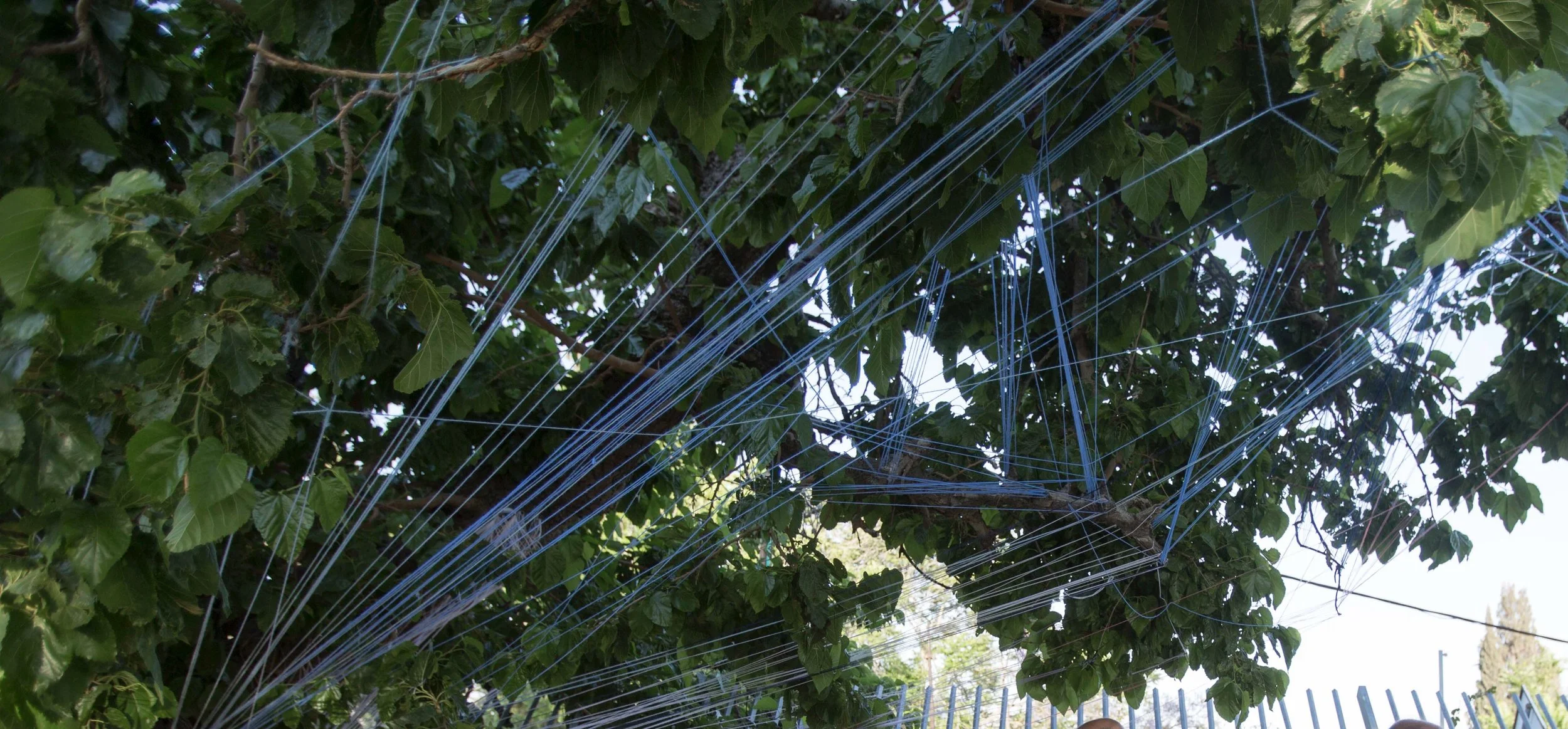
Reviewing Jerusalem, Art Intervention by Majd Amouri, 2015
Amorphous Publics
An emerging transdisciplinary framework for decolonial reflective practices, collaboration, and knowledge production
Amorphous Publics is a transdisciplinary research programme that explores how knowledge is produced, negotiated, and transformed in public contexts. Rather than understanding public space as a fixed physical location, the programme approaches the public as a dynamic and relational process that emerges whenever people, objects, institutions, memories, and practices come into dialogue.
Across museums, higher education, urban public spaces, artistic research, and community-based initiatives, Amorphous Public investigates how knowledge is collaboratively created, challenged, and reconfigured. It asks how public spaces can become spaces of encounter, reflection, and collective learning, while critically examining the power relations that shape participation, representation, and the production of knowledge. Amorphous Publics is currently taking shape as an evolving research programme, with its questions, methodologies, and collaborative formats being developed through ongoing research and practice.
The programme is grounded in decolonial perspectives that understand knowledge as situated, relational, and plural. Rather than seeking universal solutions or singular truths, Amorphous Publics explores how different forms of knowing coexist, intersect, and sometimes conflict. Particular attention is given to moments of uncertainty, tension, and disruption as productive starting points for new forms of understanding.
AMORPHOUS refers to knowledge as something fluid and unfinished, while “publics” acknowledges the multiple communities, spaces and encounters through which knowledge circulates, is negotiated and transformed.
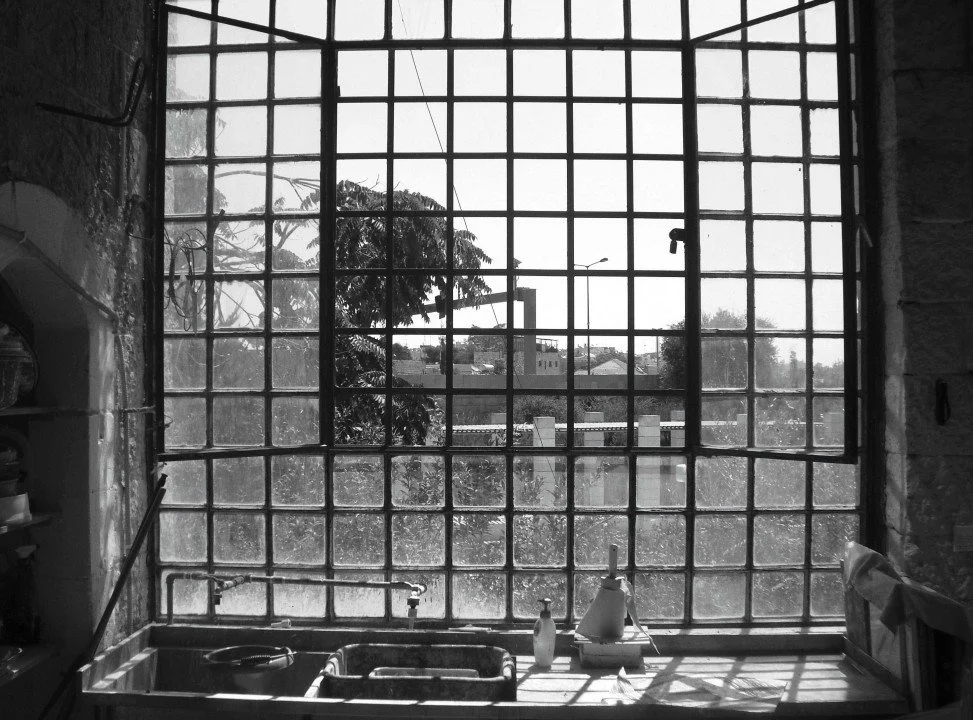
Still from The Bed & Breakfast Notebooks, Alexandra Sophie Handal, 2009, experimental short, B&W, sound, 13 min 46 sec
At the methodological core of the programme lies Decolonial Critical Reflective Practice (DCRP). DCRP is both a research methodology and a collaborative practice that supports participants in moving from lived experience and moments of irritation towards critical reflection, theoretical engagement, and the co-production of knowledge. Rather than treating research as detached observation, DCRP understands researchers, practitioners, artists, educators, and participants as co-creators of situated knowledge. It brings different forms of knowledge into conversation through a continuous movement between theory and practice, enabling processes of translation, delinking, and the rethinking of established concepts.
Amorphous Public is conceived as an open and evolving research infrastructure rather than a single project. It brings together researchers, museums, artists, educators, cultural institutions, and communities in collaborative inquiries across different contexts. Each collaboration becomes an opportunity to further develop DCRP while simultaneously generating new understandings of public knowledge practices.
Through comparative case studies, artistic interventions, collaborative pedagogies, exhibitions, and transdisciplinary research, Amorphous Public seeks to build an international network dedicated to rethinking how knowledge is created, shared, and transformed in public life.
Rather than offering a fixed model, Amorphous Public invites continuous experimentation. It understands research itself as a public practice: relational, unfinished, and always shaped through encounters with others.